
BLOG
Mortgage, Real Estate, and Entrepreneurship

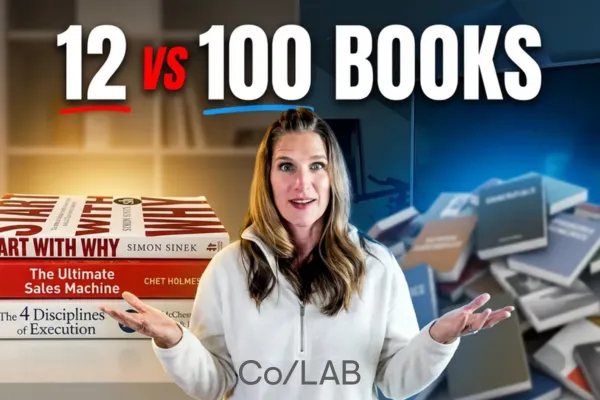
12 Business Books Every Mortgage Entrepreneur Should Read
12 Business Books That Actually Changed How We Build Mortgage Brokerages
Most business book lists are written for tech founders, venture-backed startups, or people who've never had to actually close a loan in their life.
This isn't that list.
These 12 books for mortgage entrepreneurs and anyone building a real, relationship-driven, service-based business, have been read, dog-eared, highlighted, and actually applied inside working mortgage operations. Not as homework. As tools.
If you're a loan officer who's been producing for years and quietly wondering what it would take to own something, this list is where that journey actually starts. Not on a spreadsheet. Not in a licensing manual. In your own head, with your own why and then in the systems and disciplines that make ownership sustainable.
Let's get into it.
Mindset First, Before Any Strategy Works
Here's what nobody wants to hear: the thing holding most talented loan officers back isn't knowledge. It's identity.
If you've spent years producing inside someone else's system, there's a good chance part of you still sees yourself as someone who works inside a system not someone who builds one. That's not a character flaw. It's just how it works when you've been in the same environment long enough.
The first two books on this list exist to deal with that before anything else.
Book 1: Start With Why — Simon Sinek
You've probably heard of this one. Read it anyway or read it again.
Sinek's core idea is simple: before you can build anything that lasts, you need to understand why you're building it. Not the surface answer. The real one, the one that explains the decisions you've made up to this point and the ones you'll need to make going forward.
We've had every member of our team read this book and then articulate their why. It sounds soft until you see what happens when someone actually has a clear answer. They make better decisions. They don't second-guess everything. They know what they stand for, which means they know what they won't compromise on.
If you don't know why you're still in retail or why you're thinking about leaving this book forces you to find out. Short, clear, and exactly where any ownership conversation should begin.
Book 2: Your First Five Moves — Patrick Bet-David
Where Start With Why gives you an anchor, Your First Five Moves gives you a chess board.
Patrick Bet-David wrote this for entrepreneurs who are done reacting and ready to start thinking several steps ahead. It's tactical in places, motivational in others, but the real value is in the framework it gives you for understanding where you actually are in your business journey and what decisions you need to start making that you probably haven't been.
If you're on the fence about ownership and you've been waiting for the "right time," this book has a way of making that excuse feel a lot less comfortable.
General Business: The Books That Change How You Operate
Once your mind is anchored, the next layer is learning how high-functioning businesses actually operate — not in theory, but in practice.
Book 3: The Ultimate Sales Machine — Chet Holmes
This one isn't really a sales book, even though it sounds like one. It's a discipline book. And it might be the most practically useful book on this entire list for anyone building a service business.
Chet Holmes' framework covers everything from how to run a team efficiently to how to structure your marketing, your meetings, and your time. One concept alone, the idea of scheduled "got-a-minute" windows instead of constant interruptions, changed how our entire team operates. Instead of being available for questions all day, you set two windows. Questions get batched. Focus gets protected.
That's one page out of a book that's full of them.
If you own a business or you're planning to, this is the one you highlight front to back and come back to every year.
Book 4: The Four Disciplines of Execution — Chris McChesney, Sean Covey, Jim Huling
Vision without execution is just a goal you haven't hit yet.
This book commonly known as 4DX, gives you a practical system for identifying your most critical business objective and then structuring your team around actually achieving it. Not just talking about it in quarterly meetings. Achieving it.
We applied the 4DX framework in businesses that were about 18 months old, and it changed how we ran our weekly check-ins, how we measured progress, and how we kept the day-to-day from drowning out the strategic work. That last part is where most mortgage operations lose the plot: they're so busy with production that nothing about the business ever actually gets built.
Book 5: The Great Game of Business — Jack Stack
This one is a culture book disguised as a finance book.
Jack Stack built a company by teaching every employee, every single one, to understand the financials. Not just the leadership team. Everyone. And when people understand how their daily actions connect to the numbers, accountability becomes something that generates itself.
If you're building a team, this book will change how you think about bringing people into the business and what "team buy-in" actually means.
Brand and Marketing: Stop Making It About You
Book 6: Building a StoryBrand — Donald Miller
Every mortgage entrepreneur struggles with marketing. The specific struggle is usually this: you know your business, you know your value, but when you try to explain it, on your website, in an email, in a pitch, something gets lost.
Miller's StoryBrand framework fixes that with one reframe: your customer is the hero. You are the guide.
When you position yourself as the guide, the experienced hand who helps the hero solve their problem, your messaging starts to land. People see themselves in it. They feel understood. And when someone feels understood, they convert.
We've watched business owners completely rewrite their websites, their pitches, and even how they have conversations with prospects based on this framework. It's one of the highest-ROI reads on the list.
Sales and Prospecting: The Part Nobody Glamorizes
Book 7: Fanatical Prospecting — Jeb Blount
Here's the truth that doesn't get said enough: when you go out on your own, you are responsible for every dollar that comes through the door. Not your manager. Not your company's marketing budget. You.
Fanatical Prospecting isn't a glamorous book. It's a discipline book. And it will teach you, and your team, exactly what consistent prospecting behavior looks like and why the numbers always tell the story before the excuses do. Numbers first. Story second.
If you're building a sales team, this book will also help you make better hiring decisions and set expectations that are grounded in reality, not hope.
Book 8: Perfect Phrases for Customer Service — Robert Bacal
This one is underrated, and that's exactly why it's on the list.
The Perfect Phrases series gives you word-for-word language for the high-stakes conversations that happen in every business, difficult client interactions, negotiations, performance reviews. When you're running a brokerage, you're not always the one having those conversations. Your team is. And giving them scripted frameworks to draw from isn't micromanaging, it's protecting the client experience you've worked to build.
Systems: The Thing That Actually Creates Scale
Book 9: Systemology — David Jenyns
You cannot scale what only exists in your head.
Systemology is the most practical starting point we've found for building business systems from scratch. It's not theoretical. It comes with downloadable frameworks. It walks you through where to start and how to document what your business actually does so that other people can do it too — consistently.
Here's what systems actually did for our operation: a team that once supported one brokerage now supports twenty. That's not hyperbole. That's what happens when you stop being the system and start building one.
Numbers: Stop Guessing
Book 10: Accounting for the Numberphobic — Dawn Fotopulos
The number one reason small businesses fail isn't the market. It's that the owner doesn't understand their numbers.
This book was written specifically for people who run businesses but were never trained as accountants. It teaches you how to actually read a P&L, understand a balance sheet, and make decisions based on real financial data instead of checking your bank account and hoping for the best.
If you don't know your numbers, eventually someone else will know them for you. That rarely goes well.
Productivity: High Performers Drown Too
This is the category most ambitious people skip because they assume productivity isn't their problem. It usually is.
Book 11: The Power of an Hour — Dave Lakhani
Talented people go out on their own every day and immediately get buried not because the work is too hard, but because they've never had to structure their own time before. Someone else always structured it for them.
The Power of an Hour teaches you how to protect your time, align it with your goals, and build a rhythm that keeps you moving on the right things instead of just staying busy. We turned the concepts in this book into a framework we call "Win the Year" — something we now use across all of our businesses.
Book 12: Smart but Scattered — Peg Dawson and Richard Guare
This one won't be on any other list. And that's exactly why it's here.
This book is about executive functioning, the cognitive skills that determine how we do things, not what we know. Working memory, emotional control, task initiation, sustained attention, organization, time management, flexibility. There are twelve of them, and most people have at least one or two that are legitimately holding them back without realizing it.
The book includes a quiz that helps you identify your strengths and your gaps and then gives you actual strategies for adjusting. It started as a recommendation for a child who was struggling in school. Once we saw what it did, we started using it with every member of our team.
If you're a high performer who sometimes can't figure out why you're not executing the way you know you're capable of, this is the book. It's not about intelligence. It's about understanding how you're wired and working with it instead of against it.
Frequently Asked Questions
Do I have to read all 12 books before I'm ready to start a business?
No, and that's actually the wrong way to think about it. If you're in the early stages of deciding whether ownership is right for you, start with books one and two. Those are where the real decision gets made, not in a spreadsheet, but in your own head. The rest of the list becomes relevant as you build.
Are business books actually useful for loan officers, or is it all generic advice?
The books on this list were chosen specifically because they translate directly into real business decisions, not because they sound impressive. Things like how to run your team's time, how to read a P&L, how to market yourself, how to build systems that don't depend entirely on you. These aren't abstract concepts. They're tools that work in service-based, relationship-driven businesses, which is exactly what a mortgage operation is.
What's the best business book for a loan officer who wants to become a broker owner?
If you're at that specific crossroads, start with Start With Why and Your First Five Moves to get clear on what you're building and why. Then move to The Ultimate Sales Machine and The Four Disciplines of Execution to understand how to run it. Systemology is essential once you're ready to build infrastructure. That sequence alone will change how you think about ownership.
I don't have time to read — is there another way to get through these?
Every single book on this list is available on Audible. You can move through most of them in your car, on a walk, between meetings, or during a workout. Thirty focused minutes a day gets you through most business books in a week or two. The time problem is usually a priority problem and that's actually what several of these books help you solve.
What's executive functioning, and why does it matter for entrepreneurs?
Executive functioning refers to the cognitive skills that control how you manage your time, start tasks, regulate your emotions, sustain attention, and stay organized. Most high-performers have at least one area where their executive functioning works against them which shows up as procrastination, follow-through problems, or feeling scattered despite being capable. Smart but Scattered helps you identify your specific gaps and build strategies around them. For entrepreneurs, this is often the difference between knowing what to do and actually doing it.
Should I read these alone or go through them with my team?
Both, but strategically. Some books, like Start With Why and The Great Game of Business, are most powerful when your team reads them together and applies the frameworks collectively. Others, like Smart but Scattered and Accounting for the Numberphobic, are more personal and may be more valuable for individual development. The goal isn't book club, it's application.
The Takeaway
Books give you knowledge. But knowledge without context is still just potential.
The people who build the fastest are the ones who don't just read, they apply what they've learned inside a real structure, with real accountability, alongside people who've already made the mistakes they're trying to avoid.
If you're a loan officer, a branch manager, or a current broker owner who's been watching from the sidelines and wondering what it would actually look like to build something of your own, this list is a great place to start. And when you're ready to take the conversation further, that's exactly what our team does.
We do clarity calls with loan officers and broker owners who want to map out what their own business could actually look like, what it would cost, whether it's viable, and what the path forward looks like. It's not a pitch. It's a conversation. If we can help, great. If not, you'll still leave with more clarity than you came in with.
Book your Ownership Strategy Call and let's find out what you're actually building toward.
In Case You Missed Our Previous Blogs & YouTube Videos..
Read Here: How to Build a Mortgage Brokerage You Can Actually Sell
This blog challenges loan officers and broker owners to rethink what they’re really building in the mortgage industry. Instead of just chasing the next deal, it explains how to create a mortgage brokerage that has real long-term value—one that could eventually be sold. The article breaks down the key factors that make a brokerage attractive to buyers, including ownership structure, scalable systems, strong margins, and a business that can run without the owner. It’s a practical look at how to shift from producer thinking to true business ownership.
Read Here: Broker to Correspondent Lending: How to Make the Switch
This blog breaks down the real operational and financial realities of transitioning from mortgage broker to correspondent lending. While the promise of better margins and pricing control can be appealing, the move introduces significant complexity from compliance and repurchase risk to warehouse lines and new operational workflows. You'll learn when the transition actually makes sense, what infrastructure must be in place first, and how successful brokers phase the move without jeopardizing their existing business. It’s a practical guide for brokers who want to grow intentionally and build long-term enterprise value not just chase bigger margins.
Mortgage Broker Support
Need help starting your mortgage business? Our Mortgage Broker Concierge Team is here to assist you!
If you’re curious about how we can help you simplify your operations beyond what our videos offer and want to know how you can make launching or running your brokerage stress-free, the link below explains everything. No fluff, no “exclusive training” gimmicks—just a straightforward way to see how we work with brokers to take backend tasks off their plates. Check it out here:https://colablendingfranchise.com/book-a-discovery-call

12 Business Books Every Mortgage Entrepreneur Should Read
12 Business Books That Actually Changed How We Build Mortgage Brokerages
Most business book lists are written for tech founders, venture-backed startups, or people who've never had to actually close a loan in their life.
This isn't that list.
These 12 books for mortgage entrepreneurs and anyone building a real, relationship-driven, service-based business, have been read, dog-eared, highlighted, and actually applied inside working mortgage operations. Not as homework. As tools.
If you're a loan officer who's been producing for years and quietly wondering what it would take to own something, this list is where that journey actually starts. Not on a spreadsheet. Not in a licensing manual. In your own head, with your own why and then in the systems and disciplines that make ownership sustainable.
Let's get into it.
Mindset First, Before Any Strategy Works
Here's what nobody wants to hear: the thing holding most talented loan officers back isn't knowledge. It's identity.
If you've spent years producing inside someone else's system, there's a good chance part of you still sees yourself as someone who works inside a system not someone who builds one. That's not a character flaw. It's just how it works when you've been in the same environment long enough.
The first two books on this list exist to deal with that before anything else.
Book 1: Start With Why — Simon Sinek
You've probably heard of this one. Read it anyway or read it again.
Sinek's core idea is simple: before you can build anything that lasts, you need to understand why you're building it. Not the surface answer. The real one, the one that explains the decisions you've made up to this point and the ones you'll need to make going forward.
We've had every member of our team read this book and then articulate their why. It sounds soft until you see what happens when someone actually has a clear answer. They make better decisions. They don't second-guess everything. They know what they stand for, which means they know what they won't compromise on.
If you don't know why you're still in retail or why you're thinking about leaving this book forces you to find out. Short, clear, and exactly where any ownership conversation should begin.
Book 2: Your First Five Moves — Patrick Bet-David
Where Start With Why gives you an anchor, Your First Five Moves gives you a chess board.
Patrick Bet-David wrote this for entrepreneurs who are done reacting and ready to start thinking several steps ahead. It's tactical in places, motivational in others, but the real value is in the framework it gives you for understanding where you actually are in your business journey and what decisions you need to start making that you probably haven't been.
If you're on the fence about ownership and you've been waiting for the "right time," this book has a way of making that excuse feel a lot less comfortable.
General Business: The Books That Change How You Operate
Once your mind is anchored, the next layer is learning how high-functioning businesses actually operate — not in theory, but in practice.
Book 3: The Ultimate Sales Machine — Chet Holmes
This one isn't really a sales book, even though it sounds like one. It's a discipline book. And it might be the most practically useful book on this entire list for anyone building a service business.
Chet Holmes' framework covers everything from how to run a team efficiently to how to structure your marketing, your meetings, and your time. One concept alone, the idea of scheduled "got-a-minute" windows instead of constant interruptions, changed how our entire team operates. Instead of being available for questions all day, you set two windows. Questions get batched. Focus gets protected.
That's one page out of a book that's full of them.
If you own a business or you're planning to, this is the one you highlight front to back and come back to every year.
Book 4: The Four Disciplines of Execution — Chris McChesney, Sean Covey, Jim Huling
Vision without execution is just a goal you haven't hit yet.
This book commonly known as 4DX, gives you a practical system for identifying your most critical business objective and then structuring your team around actually achieving it. Not just talking about it in quarterly meetings. Achieving it.
We applied the 4DX framework in businesses that were about 18 months old, and it changed how we ran our weekly check-ins, how we measured progress, and how we kept the day-to-day from drowning out the strategic work. That last part is where most mortgage operations lose the plot: they're so busy with production that nothing about the business ever actually gets built.
Book 5: The Great Game of Business — Jack Stack
This one is a culture book disguised as a finance book.
Jack Stack built a company by teaching every employee, every single one, to understand the financials. Not just the leadership team. Everyone. And when people understand how their daily actions connect to the numbers, accountability becomes something that generates itself.
If you're building a team, this book will change how you think about bringing people into the business and what "team buy-in" actually means.
Brand and Marketing: Stop Making It About You
Book 6: Building a StoryBrand — Donald Miller
Every mortgage entrepreneur struggles with marketing. The specific struggle is usually this: you know your business, you know your value, but when you try to explain it, on your website, in an email, in a pitch, something gets lost.
Miller's StoryBrand framework fixes that with one reframe: your customer is the hero. You are the guide.
When you position yourself as the guide, the experienced hand who helps the hero solve their problem, your messaging starts to land. People see themselves in it. They feel understood. And when someone feels understood, they convert.
We've watched business owners completely rewrite their websites, their pitches, and even how they have conversations with prospects based on this framework. It's one of the highest-ROI reads on the list.
Sales and Prospecting: The Part Nobody Glamorizes
Book 7: Fanatical Prospecting — Jeb Blount
Here's the truth that doesn't get said enough: when you go out on your own, you are responsible for every dollar that comes through the door. Not your manager. Not your company's marketing budget. You.
Fanatical Prospecting isn't a glamorous book. It's a discipline book. And it will teach you, and your team, exactly what consistent prospecting behavior looks like and why the numbers always tell the story before the excuses do. Numbers first. Story second.
If you're building a sales team, this book will also help you make better hiring decisions and set expectations that are grounded in reality, not hope.
Book 8: Perfect Phrases for Customer Service — Robert Bacal
This one is underrated, and that's exactly why it's on the list.
The Perfect Phrases series gives you word-for-word language for the high-stakes conversations that happen in every business, difficult client interactions, negotiations, performance reviews. When you're running a brokerage, you're not always the one having those conversations. Your team is. And giving them scripted frameworks to draw from isn't micromanaging, it's protecting the client experience you've worked to build.
Systems: The Thing That Actually Creates Scale
Book 9: Systemology — David Jenyns
You cannot scale what only exists in your head.
Systemology is the most practical starting point we've found for building business systems from scratch. It's not theoretical. It comes with downloadable frameworks. It walks you through where to start and how to document what your business actually does so that other people can do it too — consistently.
Here's what systems actually did for our operation: a team that once supported one brokerage now supports twenty. That's not hyperbole. That's what happens when you stop being the system and start building one.
Numbers: Stop Guessing
Book 10: Accounting for the Numberphobic — Dawn Fotopulos
The number one reason small businesses fail isn't the market. It's that the owner doesn't understand their numbers.
This book was written specifically for people who run businesses but were never trained as accountants. It teaches you how to actually read a P&L, understand a balance sheet, and make decisions based on real financial data instead of checking your bank account and hoping for the best.
If you don't know your numbers, eventually someone else will know them for you. That rarely goes well.
Productivity: High Performers Drown Too
This is the category most ambitious people skip because they assume productivity isn't their problem. It usually is.
Book 11: The Power of an Hour — Dave Lakhani
Talented people go out on their own every day and immediately get buried not because the work is too hard, but because they've never had to structure their own time before. Someone else always structured it for them.
The Power of an Hour teaches you how to protect your time, align it with your goals, and build a rhythm that keeps you moving on the right things instead of just staying busy. We turned the concepts in this book into a framework we call "Win the Year" — something we now use across all of our businesses.
Book 12: Smart but Scattered — Peg Dawson and Richard Guare
This one won't be on any other list. And that's exactly why it's here.
This book is about executive functioning, the cognitive skills that determine how we do things, not what we know. Working memory, emotional control, task initiation, sustained attention, organization, time management, flexibility. There are twelve of them, and most people have at least one or two that are legitimately holding them back without realizing it.
The book includes a quiz that helps you identify your strengths and your gaps and then gives you actual strategies for adjusting. It started as a recommendation for a child who was struggling in school. Once we saw what it did, we started using it with every member of our team.
If you're a high performer who sometimes can't figure out why you're not executing the way you know you're capable of, this is the book. It's not about intelligence. It's about understanding how you're wired and working with it instead of against it.
Frequently Asked Questions
Do I have to read all 12 books before I'm ready to start a business?
No, and that's actually the wrong way to think about it. If you're in the early stages of deciding whether ownership is right for you, start with books one and two. Those are where the real decision gets made, not in a spreadsheet, but in your own head. The rest of the list becomes relevant as you build.
Are business books actually useful for loan officers, or is it all generic advice?
The books on this list were chosen specifically because they translate directly into real business decisions, not because they sound impressive. Things like how to run your team's time, how to read a P&L, how to market yourself, how to build systems that don't depend entirely on you. These aren't abstract concepts. They're tools that work in service-based, relationship-driven businesses, which is exactly what a mortgage operation is.
What's the best business book for a loan officer who wants to become a broker owner?
If you're at that specific crossroads, start with Start With Why and Your First Five Moves to get clear on what you're building and why. Then move to The Ultimate Sales Machine and The Four Disciplines of Execution to understand how to run it. Systemology is essential once you're ready to build infrastructure. That sequence alone will change how you think about ownership.
I don't have time to read — is there another way to get through these?
Every single book on this list is available on Audible. You can move through most of them in your car, on a walk, between meetings, or during a workout. Thirty focused minutes a day gets you through most business books in a week or two. The time problem is usually a priority problem and that's actually what several of these books help you solve.
What's executive functioning, and why does it matter for entrepreneurs?
Executive functioning refers to the cognitive skills that control how you manage your time, start tasks, regulate your emotions, sustain attention, and stay organized. Most high-performers have at least one area where their executive functioning works against them which shows up as procrastination, follow-through problems, or feeling scattered despite being capable. Smart but Scattered helps you identify your specific gaps and build strategies around them. For entrepreneurs, this is often the difference between knowing what to do and actually doing it.
Should I read these alone or go through them with my team?
Both, but strategically. Some books, like Start With Why and The Great Game of Business, are most powerful when your team reads them together and applies the frameworks collectively. Others, like Smart but Scattered and Accounting for the Numberphobic, are more personal and may be more valuable for individual development. The goal isn't book club, it's application.
The Takeaway
Books give you knowledge. But knowledge without context is still just potential.
The people who build the fastest are the ones who don't just read, they apply what they've learned inside a real structure, with real accountability, alongside people who've already made the mistakes they're trying to avoid.
If you're a loan officer, a branch manager, or a current broker owner who's been watching from the sidelines and wondering what it would actually look like to build something of your own, this list is a great place to start. And when you're ready to take the conversation further, that's exactly what our team does.
We do clarity calls with loan officers and broker owners who want to map out what their own business could actually look like, what it would cost, whether it's viable, and what the path forward looks like. It's not a pitch. It's a conversation. If we can help, great. If not, you'll still leave with more clarity than you came in with.
Book your Ownership Strategy Call and let's find out what you're actually building toward.
In Case You Missed Our Previous Blogs & YouTube Videos..
Read Here: How to Build a Mortgage Brokerage You Can Actually Sell
This blog challenges loan officers and broker owners to rethink what they’re really building in the mortgage industry. Instead of just chasing the next deal, it explains how to create a mortgage brokerage that has real long-term value—one that could eventually be sold. The article breaks down the key factors that make a brokerage attractive to buyers, including ownership structure, scalable systems, strong margins, and a business that can run without the owner. It’s a practical look at how to shift from producer thinking to true business ownership.
Read Here: Broker to Correspondent Lending: How to Make the Switch
This blog breaks down the real operational and financial realities of transitioning from mortgage broker to correspondent lending. While the promise of better margins and pricing control can be appealing, the move introduces significant complexity from compliance and repurchase risk to warehouse lines and new operational workflows. You'll learn when the transition actually makes sense, what infrastructure must be in place first, and how successful brokers phase the move without jeopardizing their existing business. It’s a practical guide for brokers who want to grow intentionally and build long-term enterprise value not just chase bigger margins.
Mortgage Broker Support
Need help starting your mortgage business? Our Mortgage Broker Concierge Team is here to assist you!
If you’re curious about how we can help you simplify your operations beyond what our videos offer and want to know how you can make launching or running your brokerage stress-free, the link below explains everything. No fluff, no “exclusive training” gimmicks—just a straightforward way to see how we work with brokers to take backend tasks off their plates. Check it out here:https://colablendingfranchise.com/book-a-discovery-call
Are You Ready...
to Start Building a Legacy and Not Just a Business?
AS FEATURED IN:







Co/LAB Corporate
8795 Peach Street,
Erie, PA 16509
Company
Resources
Learn more about who we are, what we do, and how we can help you by visiting our other company websites.
www.becomeamortgagebroker.info
www.colablendingfranchise.com
Social




© Copyright 2025. Marsh and Munar PR LLC All rights reserved. Co/LAB Lending is a registered trademark of Munar Mortgage LLC.