
BLOG
Mortgage, Real Estate, and Entrepreneurship

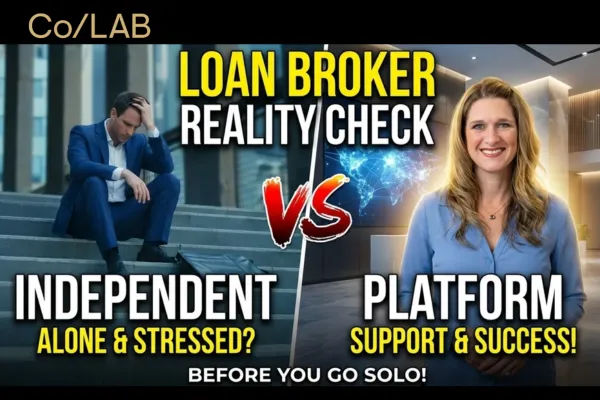
How to Become a Mortgage Broker Owner: 3 Paths Loan Officers Must Know
The 3 Paths to Becoming a Mortgage Broker Owner (And the One Most Loan Officers Get Wrong)
If you’re a loan officer thinking about leaving your W2 job and opening your own mortgage brokerage, there’s one decision that will determine whether your transition builds momentum… or stalls it.
And surprisingly, it’s not the lender you choose.
It’s not the niche you pick.
It’s not even the market you operate in.
The real difference-maker is your entry point into becoming a mortgage broker.
Choose the wrong path, and you could spend 12–24 months rebuilding systems, re-establishing relationships, and undoing decisions that seemed smart at the time. Choose the right path, and you can accelerate your income, ownership, and long-term equity from day one.
After working with loan officers across the country and spending more than two decades in the mortgage industry, a clear pattern emerges. When loan officers leave retail or correspondent environments to enter the broker channel, they typically choose one of three paths.
Each path has very different implications for:
Income potential
Ownership equity
Operational complexity
Long-term business value
Let’s break them down so you can determine which path actually leads to the business you want to build.
Why More Loan Officers Are Becoming Mortgage Brokers
Before diving into the three paths, it’s important to understand why this transition is happening in the first place.
Over the last decade, mortgage brokers have dramatically increased their market share, growing from roughly 10% of the mortgage market to over 25% today.
Why?
Because brokers can:
Access multiple wholesale lenders
Offer competitive rates and products
Maintain greater flexibility
Earn higher margins
For loan officers sitting in W2 roles, watching their companies retain significant portions of the revenue they generate, the broker model often feels like the obvious next step.
But here’s the mistake many make:
They focus on becoming a broker, but they don’t think carefully enough about how they enter the broker space.
And that decision can determine whether you build a business you own… or simply another place to work.
Path #1: Joining a Broker Platform (The “Comfortable” Option)
For many loan officers, the most common starting point is joining a broker platform or profile broker model.
At first glance, it seems like the safest path.
Here’s how it typically works:
The platform holds the broker license
You operate as a branch or producing partner
They provide compliance, technology, and infrastructure
You pay per-file fees or basis-point splits
Typical platform costs include:
$500–$1,500 per loan file
10–20% administrative fees
Additional payroll or operational charges
On the surface, it feels like a low-risk on-ramp into the broker world.
Someone else handles:
Compliance
Licensing
Systems
Operations
You simply originate loans.
So what’s the downside?
The Hidden Problem With Broker Platforms
The biggest misconception is that joining a broker platform is a stepping stone to owning a brokerage.
In reality, it’s not.
It’s a completely separate destination.
When you join a platform:
Their license is used
Their technology stack is used
Their compliance structure is used
Their lender relationships are used
Their brand often dominates the marketing
Everything you build exists inside their ecosystem.
Now imagine this scenario.
A year later you decide:
“I’m ready to open my own brokerage.”
Suddenly you realize you must rebuild everything:
Apply for your own company license
Re-establish lender approvals
Create a new tech stack
Build new workflows
Reconstruct compliance systems
You essentially go through two major transitions instead of one.
And second transitions are brutal.
They cost:
Time
Energy
Momentum
Revenue
Even worse, while you’re producing more loans, your costs grow because platform fees scale with production.
In other words:
The more successful you become, the bigger the checks you write to someone else’s business.
That’s why broker platforms work best for loan officers who never intend to own a brokerage.
If your goal is simply higher commissions with less responsibility, this model can make sense.
But if your long-term goal is ownership, the platform path can delay it significantly.
Path #2: Going Fully Independent (The DIY Route)
The second path is opening a brokerage completely on your own.
For many loan officers, this option feels intimidating.
They imagine enormous startup costs and overwhelming complexity.
But here’s the reality:
Starting a mortgage brokerage is one of the most affordable businesses you can launch.
In many cases, the financial barrier is much lower than the fear barrier.
Typical startup costs include:
State licensing
Company formation
Technology systems
Compliance setup
For experienced loan officers closing consistent volume, these costs are usually manageable.
The real challenge isn’t money.
It’s time.
The Real Cost of DIY Brokerage Ownership
When you open independently, you’re responsible for building every operational component yourself.
That includes:
Compliance infrastructure
Lender approvals
Technology integration
Loan origination systems
Processing workflows
Employee hiring and training
And you’re doing all of that while still trying to originate loans.
That’s where many brokers run into trouble.
Because time spent building a brokerage is time not spent generating revenue.
Some loan officers solve this by hiring staff early.
But hiring staff to perform tasks you’ve never done yourself introduces a new challenge: training people to do something you’re still learning.
Even when this path works—and it absolutely can—it often takes five to seven years to fully optimize the business.
Why?
Because mistakes are inevitable when you're building everything from scratch.
And when you own the business, those mistakes hit your bottom line directly.
The Upside of Independent Brokerage Ownership
Despite the challenges, the rewards of full ownership are substantial.
When you build a brokerage yourself, you gain:
Full control over compensation
Complete ownership of brand equity
Direct ownership of lender relationships
Long-term business value
In other words, you’re not just building income.
You’re building an asset.
A brokerage can eventually be:
Expanded
Partnered
Sold
But the road there can be long and complicated without the right infrastructure.
Which leads to the third option.
Path #3: The Supported Ownership Model
The third path is a newer model designed to bridge the gap between platform convenience and independent ownership.
Instead of choosing between:
Total dependence (platform model), or
Total isolation (DIY model)
This approach allows loan officers to open their own brokerage immediately while leveraging an existing operational infrastructure.
In this structure:
You own your license
You own your LLC
You own your lender relationships
You own your client database
You own your brand
But you don’t have to build the backend systems alone.
Instead, you leverage:
Established technology stacks
Compliance support
Processing infrastructure
Operational systems developed over years
Think of it like building a house.
You still own the property.
But instead of manufacturing the bricks, pouring the concrete, and wiring the electrical system yourself, you're using a framework that already works.
That allows you to focus on the activities that actually generate revenue:
Originating loans
Building referral relationships
Marketing your brand
Everything else can be supported by experienced operational teams.
Why This Hybrid Model Is Growing
Many loan officers want ownership.
But they don’t want to sacrifice two years of production figuring out how to build a brokerage from scratch.
This hybrid model addresses that challenge by removing the most time-consuming parts of business development.
The result?
Loan officers can often:
Increase production faster
Retain ownership equity
Avoid costly operational mistakes
It also eliminates the double-transition problem that platform models create.
Instead of starting over later, you build your brokerage correctly from day one.
Choosing the Right Path for Your Mortgage Career
So which path is right for you?
It depends on your goals.
Here’s a simple breakdown.
Broker Platform
Best for loan officers who:
Want higher commissions
Prefer minimal operational responsibility
Do not intend to own a brokerage
DIY Brokerage
Best for loan officers who:
Are highly organized
Have time to build infrastructure
Are comfortable learning business operations through trial and error
Supported Ownership
Best for loan officers who:
Want true brokerage ownership
Value their time
Prefer leveraging proven systems instead of building everything alone
Each path works.
But only one aligns with long-term brokerage ownership without unnecessary detours.
The Most Important Question to Ask Yourself
Before choosing a path, ask yourself one simple question:
Do I truly want to own my mortgage business?
Not just originate loans.
Not just earn higher commissions.
But actually build something that belongs to you.
Something that:
Generates long-term income
Creates enterprise value
Can support a team
Can potentially be sold in the future
If the answer is yes, then the smartest strategy is usually the same one successful entrepreneurs follow in every industry:
Build it once. Build it right.
Avoid spending years inside systems you will eventually leave.
Start with the structure that supports your long-term vision.
The Broker Opportunity Is Bigger Than Ever
The broker channel continues to expand, and opportunities for loan officers willing to step into ownership have never been stronger.
But the difference between those who succeed and those who struggle rarely comes down to effort.
It comes down to strategy.
The path you choose today determines how quickly you reach:
Higher income
True independence
Business ownership
And if you’re serious about exploring your options, the best next step is to have a clear conversation about your situation.
Your state.
Your production.
Your timeline.
Your goals.
Because the right path isn’t just about becoming a broker.
It’s about building the business you actually want to own.
Ready to Explore Mortgage Brokerage Ownership?
If you're a loan officer considering opening your own mortgage brokerage, the next step is understanding which path makes the most sense for your situation.
A strategy conversation can help you evaluate:
Your production level
Your licensing timeline
Your state requirements
Your long-term ownership goals
From there, you can determine the best structure to help you transition into brokerage ownership without losing momentum.
The opportunity in the broker channel is real.
The question is simply how you choose to enter it.
Megan Marsh
CEO/ FOUNDER of Co/LAB Broker Concierge
In Case You Missed Our Previous Blogs & YouTube Videos..
Read Here: Loan Officer Wealth Strategy: Escape the Mortgage Rat Race Through Ownership
This article explains why many loan officers feel financially trapped despite earning high commissions. It explores the common time-for-money model in the mortgage industry, revealing how relying solely on loan production can limit long-term wealth and freedom. The blog breaks down the difference between being self-employed and building true business ownership, while outlining practical strategies loan officers can use to shift from commission-based income to scalable wealth through brokerage ownership, leverage, and multiple income streams.
Read Here: 5 Client Videos Every Loan Officer Should Send to Grow Referrals in 2026
Discover the five essential client videos every loan officer should send to build trust, reduce borrower anxiety, and generate more referrals in 2026. This guide explains how strategic video communication can improve the client experience, streamline the mortgage process, and help loan officers stand out in a competitive market.
Mortgage Broker Support
Need help starting your mortgage business? Our Mortgage Broker Concierge Team is here to assist you!
If you’re curious about how we can help you simplify your operations beyond what our videos offer and want to know how you can make launching or running your brokerage stress-free, the link below explains everything. No fluff, no “exclusive training” gimmicks—just a straightforward way to see how we work with brokers to take backend tasks off their plates. Check it out here: https://colablendingfranchise.com/wesupportyou

How to Become a Mortgage Broker Owner: 3 Paths Loan Officers Must Know
The 3 Paths to Becoming a Mortgage Broker Owner (And the One Most Loan Officers Get Wrong)
If you’re a loan officer thinking about leaving your W2 job and opening your own mortgage brokerage, there’s one decision that will determine whether your transition builds momentum… or stalls it.
And surprisingly, it’s not the lender you choose.
It’s not the niche you pick.
It’s not even the market you operate in.
The real difference-maker is your entry point into becoming a mortgage broker.
Choose the wrong path, and you could spend 12–24 months rebuilding systems, re-establishing relationships, and undoing decisions that seemed smart at the time. Choose the right path, and you can accelerate your income, ownership, and long-term equity from day one.
After working with loan officers across the country and spending more than two decades in the mortgage industry, a clear pattern emerges. When loan officers leave retail or correspondent environments to enter the broker channel, they typically choose one of three paths.
Each path has very different implications for:
Income potential
Ownership equity
Operational complexity
Long-term business value
Let’s break them down so you can determine which path actually leads to the business you want to build.
Why More Loan Officers Are Becoming Mortgage Brokers
Before diving into the three paths, it’s important to understand why this transition is happening in the first place.
Over the last decade, mortgage brokers have dramatically increased their market share, growing from roughly 10% of the mortgage market to over 25% today.
Why?
Because brokers can:
Access multiple wholesale lenders
Offer competitive rates and products
Maintain greater flexibility
Earn higher margins
For loan officers sitting in W2 roles, watching their companies retain significant portions of the revenue they generate, the broker model often feels like the obvious next step.
But here’s the mistake many make:
They focus on becoming a broker, but they don’t think carefully enough about how they enter the broker space.
And that decision can determine whether you build a business you own… or simply another place to work.
Path #1: Joining a Broker Platform (The “Comfortable” Option)
For many loan officers, the most common starting point is joining a broker platform or profile broker model.
At first glance, it seems like the safest path.
Here’s how it typically works:
The platform holds the broker license
You operate as a branch or producing partner
They provide compliance, technology, and infrastructure
You pay per-file fees or basis-point splits
Typical platform costs include:
$500–$1,500 per loan file
10–20% administrative fees
Additional payroll or operational charges
On the surface, it feels like a low-risk on-ramp into the broker world.
Someone else handles:
Compliance
Licensing
Systems
Operations
You simply originate loans.
So what’s the downside?
The Hidden Problem With Broker Platforms
The biggest misconception is that joining a broker platform is a stepping stone to owning a brokerage.
In reality, it’s not.
It’s a completely separate destination.
When you join a platform:
Their license is used
Their technology stack is used
Their compliance structure is used
Their lender relationships are used
Their brand often dominates the marketing
Everything you build exists inside their ecosystem.
Now imagine this scenario.
A year later you decide:
“I’m ready to open my own brokerage.”
Suddenly you realize you must rebuild everything:
Apply for your own company license
Re-establish lender approvals
Create a new tech stack
Build new workflows
Reconstruct compliance systems
You essentially go through two major transitions instead of one.
And second transitions are brutal.
They cost:
Time
Energy
Momentum
Revenue
Even worse, while you’re producing more loans, your costs grow because platform fees scale with production.
In other words:
The more successful you become, the bigger the checks you write to someone else’s business.
That’s why broker platforms work best for loan officers who never intend to own a brokerage.
If your goal is simply higher commissions with less responsibility, this model can make sense.
But if your long-term goal is ownership, the platform path can delay it significantly.
Path #2: Going Fully Independent (The DIY Route)
The second path is opening a brokerage completely on your own.
For many loan officers, this option feels intimidating.
They imagine enormous startup costs and overwhelming complexity.
But here’s the reality:
Starting a mortgage brokerage is one of the most affordable businesses you can launch.
In many cases, the financial barrier is much lower than the fear barrier.
Typical startup costs include:
State licensing
Company formation
Technology systems
Compliance setup
For experienced loan officers closing consistent volume, these costs are usually manageable.
The real challenge isn’t money.
It’s time.
The Real Cost of DIY Brokerage Ownership
When you open independently, you’re responsible for building every operational component yourself.
That includes:
Compliance infrastructure
Lender approvals
Technology integration
Loan origination systems
Processing workflows
Employee hiring and training
And you’re doing all of that while still trying to originate loans.
That’s where many brokers run into trouble.
Because time spent building a brokerage is time not spent generating revenue.
Some loan officers solve this by hiring staff early.
But hiring staff to perform tasks you’ve never done yourself introduces a new challenge: training people to do something you’re still learning.
Even when this path works—and it absolutely can—it often takes five to seven years to fully optimize the business.
Why?
Because mistakes are inevitable when you're building everything from scratch.
And when you own the business, those mistakes hit your bottom line directly.
The Upside of Independent Brokerage Ownership
Despite the challenges, the rewards of full ownership are substantial.
When you build a brokerage yourself, you gain:
Full control over compensation
Complete ownership of brand equity
Direct ownership of lender relationships
Long-term business value
In other words, you’re not just building income.
You’re building an asset.
A brokerage can eventually be:
Expanded
Partnered
Sold
But the road there can be long and complicated without the right infrastructure.
Which leads to the third option.
Path #3: The Supported Ownership Model
The third path is a newer model designed to bridge the gap between platform convenience and independent ownership.
Instead of choosing between:
Total dependence (platform model), or
Total isolation (DIY model)
This approach allows loan officers to open their own brokerage immediately while leveraging an existing operational infrastructure.
In this structure:
You own your license
You own your LLC
You own your lender relationships
You own your client database
You own your brand
But you don’t have to build the backend systems alone.
Instead, you leverage:
Established technology stacks
Compliance support
Processing infrastructure
Operational systems developed over years
Think of it like building a house.
You still own the property.
But instead of manufacturing the bricks, pouring the concrete, and wiring the electrical system yourself, you're using a framework that already works.
That allows you to focus on the activities that actually generate revenue:
Originating loans
Building referral relationships
Marketing your brand
Everything else can be supported by experienced operational teams.
Why This Hybrid Model Is Growing
Many loan officers want ownership.
But they don’t want to sacrifice two years of production figuring out how to build a brokerage from scratch.
This hybrid model addresses that challenge by removing the most time-consuming parts of business development.
The result?
Loan officers can often:
Increase production faster
Retain ownership equity
Avoid costly operational mistakes
It also eliminates the double-transition problem that platform models create.
Instead of starting over later, you build your brokerage correctly from day one.
Choosing the Right Path for Your Mortgage Career
So which path is right for you?
It depends on your goals.
Here’s a simple breakdown.
Broker Platform
Best for loan officers who:
Want higher commissions
Prefer minimal operational responsibility
Do not intend to own a brokerage
DIY Brokerage
Best for loan officers who:
Are highly organized
Have time to build infrastructure
Are comfortable learning business operations through trial and error
Supported Ownership
Best for loan officers who:
Want true brokerage ownership
Value their time
Prefer leveraging proven systems instead of building everything alone
Each path works.
But only one aligns with long-term brokerage ownership without unnecessary detours.
The Most Important Question to Ask Yourself
Before choosing a path, ask yourself one simple question:
Do I truly want to own my mortgage business?
Not just originate loans.
Not just earn higher commissions.
But actually build something that belongs to you.
Something that:
Generates long-term income
Creates enterprise value
Can support a team
Can potentially be sold in the future
If the answer is yes, then the smartest strategy is usually the same one successful entrepreneurs follow in every industry:
Build it once. Build it right.
Avoid spending years inside systems you will eventually leave.
Start with the structure that supports your long-term vision.
The Broker Opportunity Is Bigger Than Ever
The broker channel continues to expand, and opportunities for loan officers willing to step into ownership have never been stronger.
But the difference between those who succeed and those who struggle rarely comes down to effort.
It comes down to strategy.
The path you choose today determines how quickly you reach:
Higher income
True independence
Business ownership
And if you’re serious about exploring your options, the best next step is to have a clear conversation about your situation.
Your state.
Your production.
Your timeline.
Your goals.
Because the right path isn’t just about becoming a broker.
It’s about building the business you actually want to own.
Ready to Explore Mortgage Brokerage Ownership?
If you're a loan officer considering opening your own mortgage brokerage, the next step is understanding which path makes the most sense for your situation.
A strategy conversation can help you evaluate:
Your production level
Your licensing timeline
Your state requirements
Your long-term ownership goals
From there, you can determine the best structure to help you transition into brokerage ownership without losing momentum.
The opportunity in the broker channel is real.
The question is simply how you choose to enter it.
Megan Marsh
CEO/ FOUNDER of Co/LAB Broker Concierge
In Case You Missed Our Previous Blogs & YouTube Videos..
Read Here: Loan Officer Wealth Strategy: Escape the Mortgage Rat Race Through Ownership
This article explains why many loan officers feel financially trapped despite earning high commissions. It explores the common time-for-money model in the mortgage industry, revealing how relying solely on loan production can limit long-term wealth and freedom. The blog breaks down the difference between being self-employed and building true business ownership, while outlining practical strategies loan officers can use to shift from commission-based income to scalable wealth through brokerage ownership, leverage, and multiple income streams.
Read Here: 5 Client Videos Every Loan Officer Should Send to Grow Referrals in 2026
Discover the five essential client videos every loan officer should send to build trust, reduce borrower anxiety, and generate more referrals in 2026. This guide explains how strategic video communication can improve the client experience, streamline the mortgage process, and help loan officers stand out in a competitive market.
Mortgage Broker Support
Need help starting your mortgage business? Our Mortgage Broker Concierge Team is here to assist you!
If you’re curious about how we can help you simplify your operations beyond what our videos offer and want to know how you can make launching or running your brokerage stress-free, the link below explains everything. No fluff, no “exclusive training” gimmicks—just a straightforward way to see how we work with brokers to take backend tasks off their plates. Check it out here: https://colablendingfranchise.com/wesupportyou
Are You Ready...
to Start Building a Legacy and Not Just a Business?
AS FEATURED IN:







Co/LAB Corporate
8795 Peach Street,
Erie, PA 16509
Company
Resources
Learn more about who we are, what we do, and how we can help you by visiting our other company websites.
www.becomeamortgagebroker.info
www.colablendingfranchise.com
Social




© Copyright 2025. Marsh and Munar PR LLC All rights reserved. Co/LAB Lending is a registered trademark of Munar Mortgage LLC.