BLOG
Mortgage, Real Estate, and Entrepreneurship

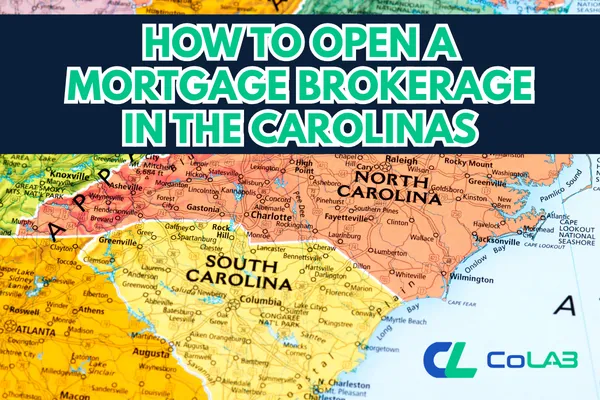
How to Open a Mortgage Brokerage in the Carolinas
What It Actually Takes to Open a Mortgage Brokerage in North or South Carolina
If you're a loan officer working in North or South Carolina and you've had that nagging thought "someday I want to own my own thing", here's some good news: the Carolinas aren't the nightmare states people sometimes assume they are.
We've covered the five hardest states to open a mortgage company, and neither NC nor SC made the list. That's meaningful. It means the barriers to launching your own brokerage here are real but manageable — especially if you've already got a few years of production behind you.
But there is one rule specific to the Carolinas that catches loan officers off guard almost every time. We'll cover that, plus everything else you actually need to know: net worth requirements, experience thresholds, licensing costs, timelines, and which agencies you're dealing with in each state.
Let's get into it.
Money: What Net Worth Do You Actually Need?
This is usually the first thing that stops people from even exploring ownership. There's this assumption that you need six figures sitting in a bank account before you can even think about opening your own shop.
In the Carolinas? That's not the case.
North Carolina requires a mortgage broker to demonstrate $25,000 in net worth with only $10,000 of that needing to be liquid. You'll confirm this on a certified statement of financial condition. You sign it yourself. It's not audited financials. It's not the kind of third-party review process that other states require, which can cost thousands of dollars before you've written a single loan under your own name.
South Carolina goes even lighter. There's no hard net worth minimum for brokers. You do have to affirm financial solvency and carry a surety bond, but that's a far cry from states like Illinois, where gap audits and formal financial reviews can drain your budget before you're even approved.
So if money has been the reason you haven't pulled the trigger, take it off your list of obstacles. It probably isn't what's going to stop you here.
Experience Requirements: Do You Already Qualify?
Both states have experience requirements for the person responsible for the company, typically called the qualifying individual.
North Carolina requires three years of residential mortgage lending experience. If you're two years in, you'll need to wait. But if you've been originating for a few years at a retail bank, a credit union, or a wholesale shop, you're likely already there.
South Carolina drops that threshold to two years and gives you a bit more flexibility on where that experience came from. Two years originating under a mortgage broker counts, but so does two years at a bank. That's meaningful for loan officers who started their careers at depository institutions and assumed their experience might not count in the broker world.
If you're not sure whether your background meets the experience requirements, that's exactly the kind of thing worth talking through with someone who knows these rules cold. It's not a complicated answer once you have the right conversation.
South Carolina's Two-Regulator System (This Is the One Most People Miss)
Here's where South Carolina gets a little more complex than most states.
Most states have one regulatory body that handles mortgage licensing. South Carolina has two and knowing which one governs your specific business model isn't optional.
Mortgage brokers in South Carolina are licensed and regulated by the Department of Consumer Affairs (DCA).
Mortgage lenders are licensed through the Board of Financial Institutions.
If you want to operate as both a broker and a lender, you'll need approval from both agencies. That doubles your compliance touchpoints.
It also affects individual loan officers in ways they don't always expect. If you've been working at a lender, you may have taken continuing education courses aligned with the lender license, not the broker license. When you go to open your own brokerage, that gap can create problems. The company has to be approved by the right agency, and your personal license needs to match.
This is why checking in with someone who knows the licensing landscape matters before you start the application process. You don't want to discover the CE mismatch after you've already submitted paperwork.
The Rule That Catches Loan Officers Every Time: No Dual Licensing
This is the big one. And it's the reason we made sure to flag it upfront.
In many states, a loan officer who opens their own mortgage company can hold licenses for certain states at another company, a practice called dual licensing or dual agency. It's a common strategy for keeping costs down while you build out your own license portfolio.
North and South Carolina do not allow this.
When you open your brokerage and you want to close loans in the Carolinas, those state licenses have to live inside your company. You cannot split your license across multiple companies for different states. It's called dual agency, and neither state permits it.
This doesn't mean it's a dealbreaker, it just means you need to plan accordingly. Every state you want to originate in needs to be fully licensed under your entity. That affects your budget, your timeline, and your compliance setup. Know it going in so it doesn't blindside you.
What Does It Actually Cost to Get Licensed?
Let's talk numbers, because vague answers don't help anyone make real decisions.
North Carolina Licensing Costs
Application fee: $1,200
NMLS processing fee, credit report, and background check fees on top of that
Surety bond: required at $75,000 but you're not paying $75,000. The actual cost of the bond is typically $750 to $1,200 depending on your credit
Annual assessment fee based on loan volume
One more thing worth flagging: North Carolina's quarterly reporting filings are notoriously time-consuming. If you ask anyone who manages licensing operations, they'll tell you NC takes roughly five times the effort of most other states. The cost won't get you, but the ongoing compliance work is real, and it's worth having support.
South Carolina Licensing Costs
Initial filing fee: $750
Annual renewal: $550 (increases as volume grows)
Surety bond starting at $25,000 again, the actual bond premium is a fraction of that
Separate annual mortgage log filed directly with the DCA, this is on top of your NMLS quarterly filings
South Carolina is generally the lighter lift of the two from a cost standpoint. But the dual-regulator structure means you need to be careful about where your licenses sit and which CE requirements apply to you.
How Long Does It Take to Get Approved?
Plan for roughly 90 days from application submission to approval, assuming you're not applying during renewal season when everyone and their manager is trying to get licensed at the same time.
That's consistent with what we see across most states. Some take longer. A few move faster. The Carolinas fall in that standard range, which is actually good news if you're trying to plan a realistic launch timeline.
Ninety days is workable. It means you can be producing under your own company within a quarter of starting the process, if you've got your documents in order and your application is clean.
Is It Worth It?
Here's the honest answer: yes. But not because ownership is some magical transformation.
It's worth it because you stop building equity for someone else and start building it for yourself. It's worth it because the ceiling you've been bumping against disappears. And it's worth it because having a real goal, not just "close more loans this month," but build something that's mine, changes how you show up.
Even if you're not there yet on experience or net worth, knowing what the path looks like changes the timeline from "someday" to "18 months from now." That's a completely different mindset.
Ownership doesn't mean doing more. It means building something that works for you.
Frequently Asked Questions
Do I need a lot of money saved up to open a mortgage brokerage in North or South Carolina?
Not as much as most people assume. North Carolina requires $25,000 in net worth with only $10,000 liquid, confirmed through a self-certified financial statement, no expensive audited financials required. South Carolina has no hard net worth minimum for brokers, just a requirement to affirm financial solvency and carry a surety bond. Compared to states that require third-party audits costing thousands before you even apply, the Carolinas are relatively accessible from a capital standpoint.
How much experience do I need to open a mortgage company in the Carolinas?
North Carolina requires three years of residential mortgage lending experience for the qualifying individual, the person responsible for the company. South Carolina requires two years, and experience originating at a bank counts, not just broker experience. If you've been a producing loan officer for a few years, there's a good chance you already meet the threshold in at least one of these states.
What is dual licensing and why is it a problem in North and South Carolina?
Dual licensing or dual agency is when a loan officer holds licenses for certain states at one company while running their own brokerage separately. It's a way some LOs reduce costs while building out their license portfolio. The Carolinas don't allow it. If you want to originate in North or South Carolina under your own company, those licenses have to live inside your entity. You can't split them across different companies. It's one of the most common surprises for loan officers opening their own brokerages in these states.
Why does South Carolina have two regulators, and does it affect my loan officer license?
South Carolina is one of a small number of states with two separate regulatory agencies for mortgage licensing. Mortgage brokers are regulated by the Department of Consumer Affairs; mortgage lenders fall under the Board of Financial Institutions. It matters because if you've been working as a loan officer at a lender, your continuing education and license type may be aligned with the lender side, not the broker side. When you open a brokerage, you need to make sure you have the right license and the right CE on your record. It's worth checking before you apply.
How long does it take to get a mortgage brokerage approved in North or South Carolina?
Most applicants in the Carolinas can expect roughly 90 days from application submission to approval. That's in line with what we see across most states. The exception is renewal season, when application volumes spike and timelines can stretch. If you're planning a launch, building 90 days into your timeline from the start gives you a realistic runway.
Can I open a mortgage brokerage in the Carolinas while still originating full-time?
Yes and for most loan officers, that's exactly how it works. The licensing and business formation process happens around your production, not instead of it. The time-consuming part is the paperwork, compliance setup, and application process, not originating loans. With the right support structure in place, you don't have to choose between keeping your pipeline moving and building toward ownership.
You Don't Have to Figure This Out Alone
Opening a mortgage brokerage in North or South Carolina is genuinely doable, even if the licensing details feel overwhelming at first. The net worth requirements are manageable, the experience thresholds are realistic for most producing LOs, and the 90-day approval timeline means you're not staring down a multi-year runway before you can operate under your own name.
The part that trips people up isn't the money or the experience. It's the things nobody told them, the dual-agency rule, the two-regulator structure in South Carolina, the NC compliance filings that take five times longer than other states. Those are the details that make the difference between a clean launch and a frustrating detour.
If you're a loan officer in the Carolinas who's been thinking about this longer than you'd like to admit, let's have a real conversation about what your path actually looks like. Not a pitch, a clarity call with someone who knows these rules and can walk you through your specific situation. Book your Ownership Strategy Call and find out what it would actually take to make this happen.
Megan Marsh
CEO/ FOUNDER of Co/LAB Broker Concierge
In Case You Missed Our Previous Blogs & YouTube Videos..
Read Here: 3 Mistakes Keeping Loan Officers on a Pipeline Flatline
In this blog, I share the three mistakes I see loan officers making that can keep them from growing their pipeline and reaching their full potential. From trying to do everything yourself to hiring the wrong support and staying in an environment that doesn't challenge you, I'll walk you through what may be holding your business back and what you can do differently. Because sometimes, growth isn't about working harder. It's about building a business structure that actually supports where you want to go.
Read Here: NMLS License Disqualifications: What Actually Blocks You
Wondering if your past could prevent you from becoming a licensed loan officer? This blog breaks down what the NMLS actually considers when reviewing license applications, including criminal history, credit issues, past bankruptcies, and application disclosures. Learn what may disqualify you, what doesn't automatically rule you out, and how to take the next step toward a mortgage career with confidence.
Mortgage Broker Support
Need help starting your mortgage business? Our Mortgage Broker Concierge Team is here to assist you!
If you’re curious about how we can help you simplify your operations beyond what our videos offer and want to know how you can make launching or running your brokerage stress-free, the link below explains everything. No fluff, no “exclusive training” gimmicks, just a straightforward way to see how we work with brokers to take backend tasks off their plates. Check it out here: https://colablendingfranchise.com/wesupportyou

How to Open a Mortgage Brokerage in the Carolinas
What It Actually Takes to Open a Mortgage Brokerage in North or South Carolina
If you're a loan officer working in North or South Carolina and you've had that nagging thought "someday I want to own my own thing", here's some good news: the Carolinas aren't the nightmare states people sometimes assume they are.
We've covered the five hardest states to open a mortgage company, and neither NC nor SC made the list. That's meaningful. It means the barriers to launching your own brokerage here are real but manageable — especially if you've already got a few years of production behind you.
But there is one rule specific to the Carolinas that catches loan officers off guard almost every time. We'll cover that, plus everything else you actually need to know: net worth requirements, experience thresholds, licensing costs, timelines, and which agencies you're dealing with in each state.
Let's get into it.
Money: What Net Worth Do You Actually Need?
This is usually the first thing that stops people from even exploring ownership. There's this assumption that you need six figures sitting in a bank account before you can even think about opening your own shop.
In the Carolinas? That's not the case.
North Carolina requires a mortgage broker to demonstrate $25,000 in net worth with only $10,000 of that needing to be liquid. You'll confirm this on a certified statement of financial condition. You sign it yourself. It's not audited financials. It's not the kind of third-party review process that other states require, which can cost thousands of dollars before you've written a single loan under your own name.
South Carolina goes even lighter. There's no hard net worth minimum for brokers. You do have to affirm financial solvency and carry a surety bond, but that's a far cry from states like Illinois, where gap audits and formal financial reviews can drain your budget before you're even approved.
So if money has been the reason you haven't pulled the trigger, take it off your list of obstacles. It probably isn't what's going to stop you here.
Experience Requirements: Do You Already Qualify?
Both states have experience requirements for the person responsible for the company, typically called the qualifying individual.
North Carolina requires three years of residential mortgage lending experience. If you're two years in, you'll need to wait. But if you've been originating for a few years at a retail bank, a credit union, or a wholesale shop, you're likely already there.
South Carolina drops that threshold to two years and gives you a bit more flexibility on where that experience came from. Two years originating under a mortgage broker counts, but so does two years at a bank. That's meaningful for loan officers who started their careers at depository institutions and assumed their experience might not count in the broker world.
If you're not sure whether your background meets the experience requirements, that's exactly the kind of thing worth talking through with someone who knows these rules cold. It's not a complicated answer once you have the right conversation.
South Carolina's Two-Regulator System (This Is the One Most People Miss)
Here's where South Carolina gets a little more complex than most states.
Most states have one regulatory body that handles mortgage licensing. South Carolina has two and knowing which one governs your specific business model isn't optional.
Mortgage brokers in South Carolina are licensed and regulated by the Department of Consumer Affairs (DCA).
Mortgage lenders are licensed through the Board of Financial Institutions.
If you want to operate as both a broker and a lender, you'll need approval from both agencies. That doubles your compliance touchpoints.
It also affects individual loan officers in ways they don't always expect. If you've been working at a lender, you may have taken continuing education courses aligned with the lender license, not the broker license. When you go to open your own brokerage, that gap can create problems. The company has to be approved by the right agency, and your personal license needs to match.
This is why checking in with someone who knows the licensing landscape matters before you start the application process. You don't want to discover the CE mismatch after you've already submitted paperwork.
The Rule That Catches Loan Officers Every Time: No Dual Licensing
This is the big one. And it's the reason we made sure to flag it upfront.
In many states, a loan officer who opens their own mortgage company can hold licenses for certain states at another company, a practice called dual licensing or dual agency. It's a common strategy for keeping costs down while you build out your own license portfolio.
North and South Carolina do not allow this.
When you open your brokerage and you want to close loans in the Carolinas, those state licenses have to live inside your company. You cannot split your license across multiple companies for different states. It's called dual agency, and neither state permits it.
This doesn't mean it's a dealbreaker, it just means you need to plan accordingly. Every state you want to originate in needs to be fully licensed under your entity. That affects your budget, your timeline, and your compliance setup. Know it going in so it doesn't blindside you.
What Does It Actually Cost to Get Licensed?
Let's talk numbers, because vague answers don't help anyone make real decisions.
North Carolina Licensing Costs
Application fee: $1,200
NMLS processing fee, credit report, and background check fees on top of that
Surety bond: required at $75,000 but you're not paying $75,000. The actual cost of the bond is typically $750 to $1,200 depending on your credit
Annual assessment fee based on loan volume
One more thing worth flagging: North Carolina's quarterly reporting filings are notoriously time-consuming. If you ask anyone who manages licensing operations, they'll tell you NC takes roughly five times the effort of most other states. The cost won't get you, but the ongoing compliance work is real, and it's worth having support.
South Carolina Licensing Costs
Initial filing fee: $750
Annual renewal: $550 (increases as volume grows)
Surety bond starting at $25,000 again, the actual bond premium is a fraction of that
Separate annual mortgage log filed directly with the DCA, this is on top of your NMLS quarterly filings
South Carolina is generally the lighter lift of the two from a cost standpoint. But the dual-regulator structure means you need to be careful about where your licenses sit and which CE requirements apply to you.
How Long Does It Take to Get Approved?
Plan for roughly 90 days from application submission to approval, assuming you're not applying during renewal season when everyone and their manager is trying to get licensed at the same time.
That's consistent with what we see across most states. Some take longer. A few move faster. The Carolinas fall in that standard range, which is actually good news if you're trying to plan a realistic launch timeline.
Ninety days is workable. It means you can be producing under your own company within a quarter of starting the process, if you've got your documents in order and your application is clean.
Is It Worth It?
Here's the honest answer: yes. But not because ownership is some magical transformation.
It's worth it because you stop building equity for someone else and start building it for yourself. It's worth it because the ceiling you've been bumping against disappears. And it's worth it because having a real goal, not just "close more loans this month," but build something that's mine, changes how you show up.
Even if you're not there yet on experience or net worth, knowing what the path looks like changes the timeline from "someday" to "18 months from now." That's a completely different mindset.
Ownership doesn't mean doing more. It means building something that works for you.
Frequently Asked Questions
Do I need a lot of money saved up to open a mortgage brokerage in North or South Carolina?
Not as much as most people assume. North Carolina requires $25,000 in net worth with only $10,000 liquid, confirmed through a self-certified financial statement, no expensive audited financials required. South Carolina has no hard net worth minimum for brokers, just a requirement to affirm financial solvency and carry a surety bond. Compared to states that require third-party audits costing thousands before you even apply, the Carolinas are relatively accessible from a capital standpoint.
How much experience do I need to open a mortgage company in the Carolinas?
North Carolina requires three years of residential mortgage lending experience for the qualifying individual, the person responsible for the company. South Carolina requires two years, and experience originating at a bank counts, not just broker experience. If you've been a producing loan officer for a few years, there's a good chance you already meet the threshold in at least one of these states.
What is dual licensing and why is it a problem in North and South Carolina?
Dual licensing or dual agency is when a loan officer holds licenses for certain states at one company while running their own brokerage separately. It's a way some LOs reduce costs while building out their license portfolio. The Carolinas don't allow it. If you want to originate in North or South Carolina under your own company, those licenses have to live inside your entity. You can't split them across different companies. It's one of the most common surprises for loan officers opening their own brokerages in these states.
Why does South Carolina have two regulators, and does it affect my loan officer license?
South Carolina is one of a small number of states with two separate regulatory agencies for mortgage licensing. Mortgage brokers are regulated by the Department of Consumer Affairs; mortgage lenders fall under the Board of Financial Institutions. It matters because if you've been working as a loan officer at a lender, your continuing education and license type may be aligned with the lender side, not the broker side. When you open a brokerage, you need to make sure you have the right license and the right CE on your record. It's worth checking before you apply.
How long does it take to get a mortgage brokerage approved in North or South Carolina?
Most applicants in the Carolinas can expect roughly 90 days from application submission to approval. That's in line with what we see across most states. The exception is renewal season, when application volumes spike and timelines can stretch. If you're planning a launch, building 90 days into your timeline from the start gives you a realistic runway.
Can I open a mortgage brokerage in the Carolinas while still originating full-time?
Yes and for most loan officers, that's exactly how it works. The licensing and business formation process happens around your production, not instead of it. The time-consuming part is the paperwork, compliance setup, and application process, not originating loans. With the right support structure in place, you don't have to choose between keeping your pipeline moving and building toward ownership.
You Don't Have to Figure This Out Alone
Opening a mortgage brokerage in North or South Carolina is genuinely doable, even if the licensing details feel overwhelming at first. The net worth requirements are manageable, the experience thresholds are realistic for most producing LOs, and the 90-day approval timeline means you're not staring down a multi-year runway before you can operate under your own name.
The part that trips people up isn't the money or the experience. It's the things nobody told them, the dual-agency rule, the two-regulator structure in South Carolina, the NC compliance filings that take five times longer than other states. Those are the details that make the difference between a clean launch and a frustrating detour.
If you're a loan officer in the Carolinas who's been thinking about this longer than you'd like to admit, let's have a real conversation about what your path actually looks like. Not a pitch, a clarity call with someone who knows these rules and can walk you through your specific situation. Book your Ownership Strategy Call and find out what it would actually take to make this happen.
Megan Marsh
CEO/ FOUNDER of Co/LAB Broker Concierge
In Case You Missed Our Previous Blogs & YouTube Videos..
Read Here: 3 Mistakes Keeping Loan Officers on a Pipeline Flatline
In this blog, I share the three mistakes I see loan officers making that can keep them from growing their pipeline and reaching their full potential. From trying to do everything yourself to hiring the wrong support and staying in an environment that doesn't challenge you, I'll walk you through what may be holding your business back and what you can do differently. Because sometimes, growth isn't about working harder. It's about building a business structure that actually supports where you want to go.
Read Here: NMLS License Disqualifications: What Actually Blocks You
Wondering if your past could prevent you from becoming a licensed loan officer? This blog breaks down what the NMLS actually considers when reviewing license applications, including criminal history, credit issues, past bankruptcies, and application disclosures. Learn what may disqualify you, what doesn't automatically rule you out, and how to take the next step toward a mortgage career with confidence.
Mortgage Broker Support
Need help starting your mortgage business? Our Mortgage Broker Concierge Team is here to assist you!
If you’re curious about how we can help you simplify your operations beyond what our videos offer and want to know how you can make launching or running your brokerage stress-free, the link below explains everything. No fluff, no “exclusive training” gimmicks, just a straightforward way to see how we work with brokers to take backend tasks off their plates. Check it out here: https://colablendingfranchise.com/wesupportyou
Are You Ready...
to Start Building a Legacy and Not Just a Business?
AS FEATURED IN:







Co/LAB Corporate
8795 Peach Street,
Erie, PA 16509
Company
Resources
Learn more about who we are, what we do, and how we can help you by visiting our other company websites.
www.becomeamortgagebroker.info
www.colablendingfranchise.com
Social




© Copyright 2025. Marsh and Munar PR LLC All rights reserved. Co/LAB Lending is a registered trademark of Munar Mortgage LLC.